


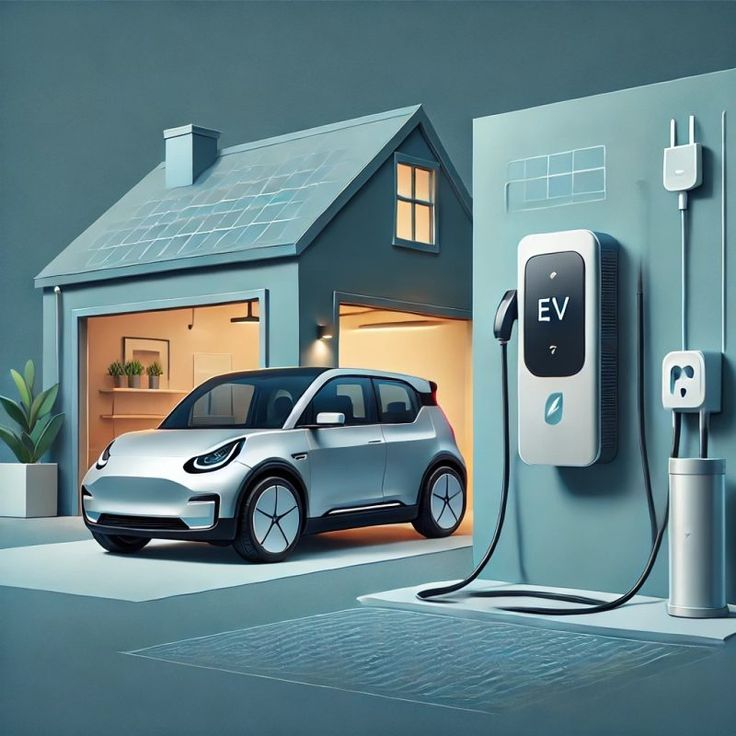
The Golden Rules Smart EV Owners Use to Protect Battery SOH
Introduction: The New Odometer Is Here
Back in the gas-car days, buying a used vehicle was simple. You checked the odometer, glanced at the service records, and hoped for the best.
In 2026, the used EV market plays by different rules.
Mileage still matters—but it’s no longer the main event. Savvy buyers are now asking a much more important question before they even talk price:
What’s the battery’s State of Health (SOH)?
Think of SOH as your EV’s financial profile. Just like a credit score affects loan terms, battery health directly shapes your EV’s resale value. According to recent U.S. market data, two identical EVs with the same mileage can differ in price by $3,000–$5,000 simply because one has a 96% SOH while the other sits closer to 88%.
If you plan to sell or trade in your EV someday, how you treat the battery today matters more than most owners realize. The good news? Protecting battery health doesn’t require obsession—just smarter habits.
This guide breaks down how to financially manage your EV battery so it stays an asset, not a liability.
1. The “Silent Killers”: Three Habits Tanking Your Battery Health
Most owners don't set out to ruin their cars. They’re usually just victims of "Gas Station Logic"—that old-school habit of filling up to 100% and running it down to empty. In a lithium-ion world, that logic is a fast track to a dead asset. Let’s look at the three habits currently "killing" ev battery health across the country.
Habit 1: The "100% OCD"
We all love seeing that "100%" on our phones or our dashboards. It feels productive. But from a chemical perspective, a battery at 100% is in a state of high anxiety.
Imagine a rubber band. If you stretch it to its absolute limit and hold it there for 12 hours every single night, what happens? Eventually, it loses its "snap." It gets brittle. Lithium-ion cells are no different. When they are crammed full of ions at high voltage, the internal structure is under immense pressure.
The Financial Hit: Keeping a battery at a high state of charge (SoC) for long periods can accelerate "calendar aging" by up to 20% per year.
The Fix: Unless you’re hitting the road for a cross-country trip tomorrow, cap that limit at 80%. Your battery—and your future resale check—will thank you.

Habit 2: The "Limit Testing"
On the flip side, some drivers take "range anxiety" to the extreme, rolling into the driveway with 2% or 3% left. While modern tech includes a "buffer" to keep the car from literally dying, "Deep Discharge" is a traumatic event for the battery.
When the battery is nearly empty, the voltage drops to a danger zone. This makes the internal chemistry unstable, occasionally leading to "dendrites"—tiny, microscopic spikes that can eventually cause internal shorts.
The Rule: If you wouldn't let your smartphone die every single day, don't do it to your $40,000 car. Keeping it above 20% is the "safe zone" for a long evlife.

Habit 3: Charging in the "Death Valley" Sun
Heat is the absolute nemesis of sustainability in batteries. The chemical reactions inside a battery are designed to happen in a "Goldilocks" temperature window (usually between 60°F and 85°F).
If you plug into a public ev charger in the middle of a 100°F afternoon in Arizona or Florida, you’re subjecting the cells to a "Double Whammy." You have the blistering ambient heat combined with the massive internal heat generated by fast-moving electrons.
The Result: Heat causes the internal protective layers of the battery to break down. Once that lithium is "cooked" off, your range is gone for good.

2. Fast vs. Slow: Why “Speed” Has a Hidden Price Tag
To understand the difference between a DC fast charger and a home charger, let’s use the "Sponge Analogy."
The "Sponge and the Firehose"
Imagine you have a dry kitchen sponge and you want to fill it with water.
The Slow Drip (AC Home Charging): You turn the faucet to a tiny drip. Every single drop is absorbed perfectly. No mess, no stress. This is what your battery experiences with a lv2 charger. It’s gentle, it’s cool, and it’s efficient.
The Firehose (DC Fast Charging): You take that same sponge to a fire hydrant and blast it. Sure, it gets wet fast, but the force is tearing the fibers of the sponge, and half the water is splashing onto the floor.
The “Fever” Effect
Fast charging is essentially forcing a massive amount of energy into the cells in a very short time. This creates a "fever" inside the battery. Even with the best liquid-cooling tech, the internal resistance creates heat that the cooling system can't always neutralize.
Data from 2026 market analysis shows that EVs that rely on fast charging more than three times a week show a 2.5% higher degradation rate per year than those that primarily use a home charger. Over 5 years, that’s a 12.5% loss in capacity—the difference between a car that can make it to the next city and one that can't.

Why the last 20% takes forever?
Ever wonder why fast charging from 10% to 80% is a breeze, but 80% to 100% feels like watching paint dry? That’s because the car’s Battery Management System (BMS) is trying to save the battery’s life. Think of it like a parking garage. When the garage is empty, cars can fly in. When it's 80% full, the remaining cars have to circle slowly to find a spot without crashing. Forcing a fast charge into that last 20% is like trying to park a car at 60 mph in a crowded garage. It ends badly.
3. The "Golden Rules" of Battery Management
If you want to be the person selling your car for a premium in five years, you need to follow the "Battery Financial Management" protocol. This isn't just about being "green"—it's about being smart with your money.
Rule 1: Stay in the "20-80" Sweet Spot
For your daily commute, keep your battery between 20% and 80%. This is where the lithium ions are at their most stable. By staying in this zone, you minimize the "voltage stress" that leads to long-term capacity loss.

Rule 2: Let Slow Charging Be the Hero
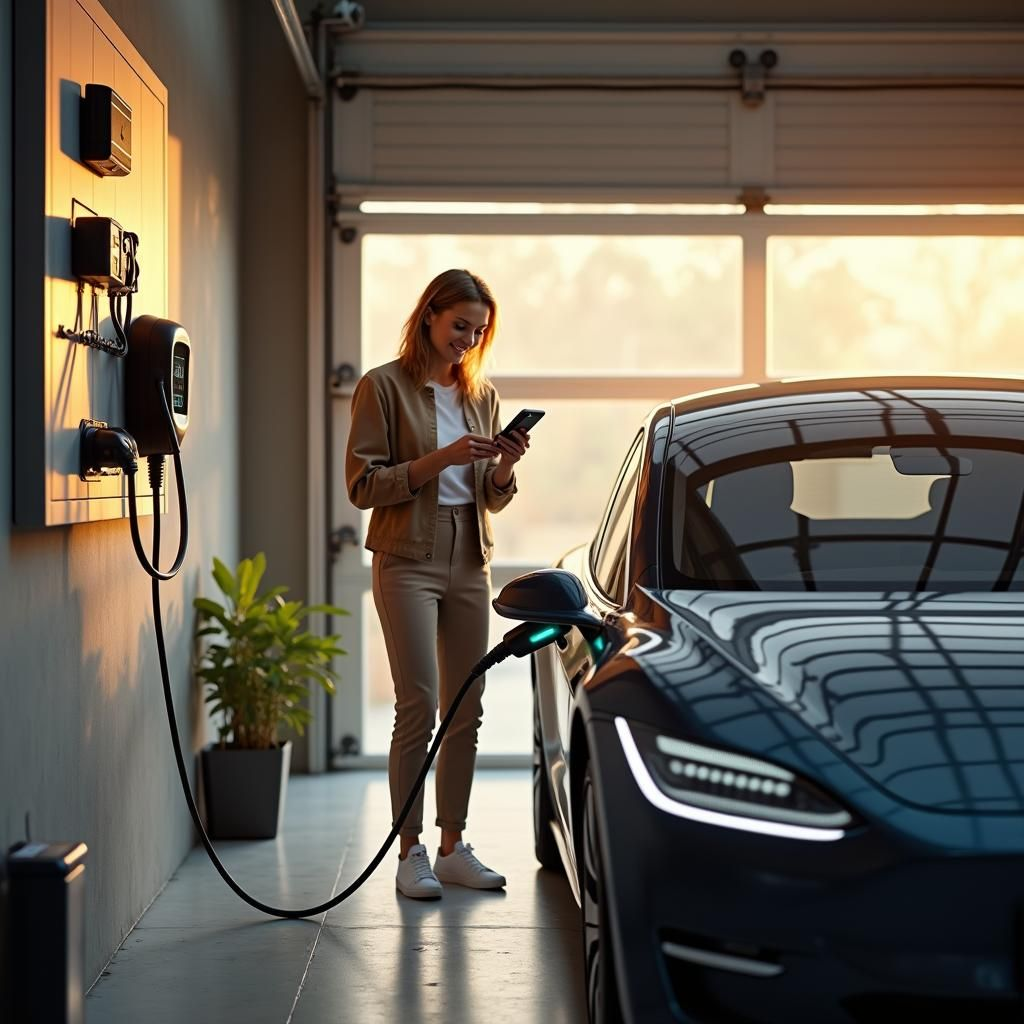
Your home charger isn't just a convenience; it’s your battery’s health spa. A 240V lv2 charger is slow enough to keep temperatures low but fast enough to fill your car while you sleep.
The Pro Move: This is where choosing the right hardware makes a massive difference. A system like the RippleOn Smart Home Charger is designed for this "low-stress" energy delivery. By using its smart home charger features, you can ensure the car "refills" during the coolest part of the night, giving your battery a gentle, cost-effective treatment while the grid is quiet.

Rule 3: Always Pre-Condition Before a Road Trip
If you know you’re going to hit a fast charger, use your car’s built-in navigation to route to the station. This tells the car to "Pre-Condition" the battery. It will either warm it up or cool it down so the battery is at the perfect temperature to handle the "firehose" of energy, reducing the shock to the system.
4. How to Monetize Your "Good Habits"
So, you’ve been a "Battery Saint" for three years. How do you actually turn that into cash when you sell the car? In 2026, data is the ultimate currency.
Step 1: Get Your SOH Certificate
Don't just tell the buyer the battery is good—prove it. Use a professional service to pull a State of Health (SOH) report. Seeing a certified "96% Capacity" on paper is the most powerful negotiation tool in your arsenal.

Step 2: Show Your Charging Profile
Smart systems like RippleOn provide a digital history of your sessions. Being able to show a prospective buyer a log that proves 95% of your charges were "Slow AC" at home (instead of "High-Stress Public Charging") is the equivalent of having a perfect oil-change history on an old Porsche. It’s the ultimate peace of mind for the next owner.
Step 3: Sell the "Green Lifestyle" ROI
When you list your car, don't just talk about the paint or the leather. Talk about the sustainability of the battery. Explain that because you followed the 20-80 rule, the car still has "like-new" range. In a world where people are terrified of "battery replacement costs," a healthy battery is your biggest selling point.
Conclusion: Your EV is an Asset, Not a Commodity
At the end of the day, your electric car is one of the most significant investments you’ll ever make. The move to an evlife should be a financial win, not a headache.
The secret to winning the game is simple: Don't be a slave to your battery, but don't be a bully either. You don't need to overthink every single mile, but you do need to make smart choices about how you "refuel." By prioritizing a high-quality home charger and avoiding the "Silent Killers" of heat and 100% charging, you are essentially putting money into a high-interest savings account.
Five years from now, when the "average" owner is frustrated with range loss and low-ball trade-in offers, you’ll be the one with the "Gold Standard" car, commanding top dollar and moving on to your next vehicle with a major financial head start.

Leave a comment
This site is protected by hCaptcha and the hCaptcha Privacy Policy and Terms of Service apply.