


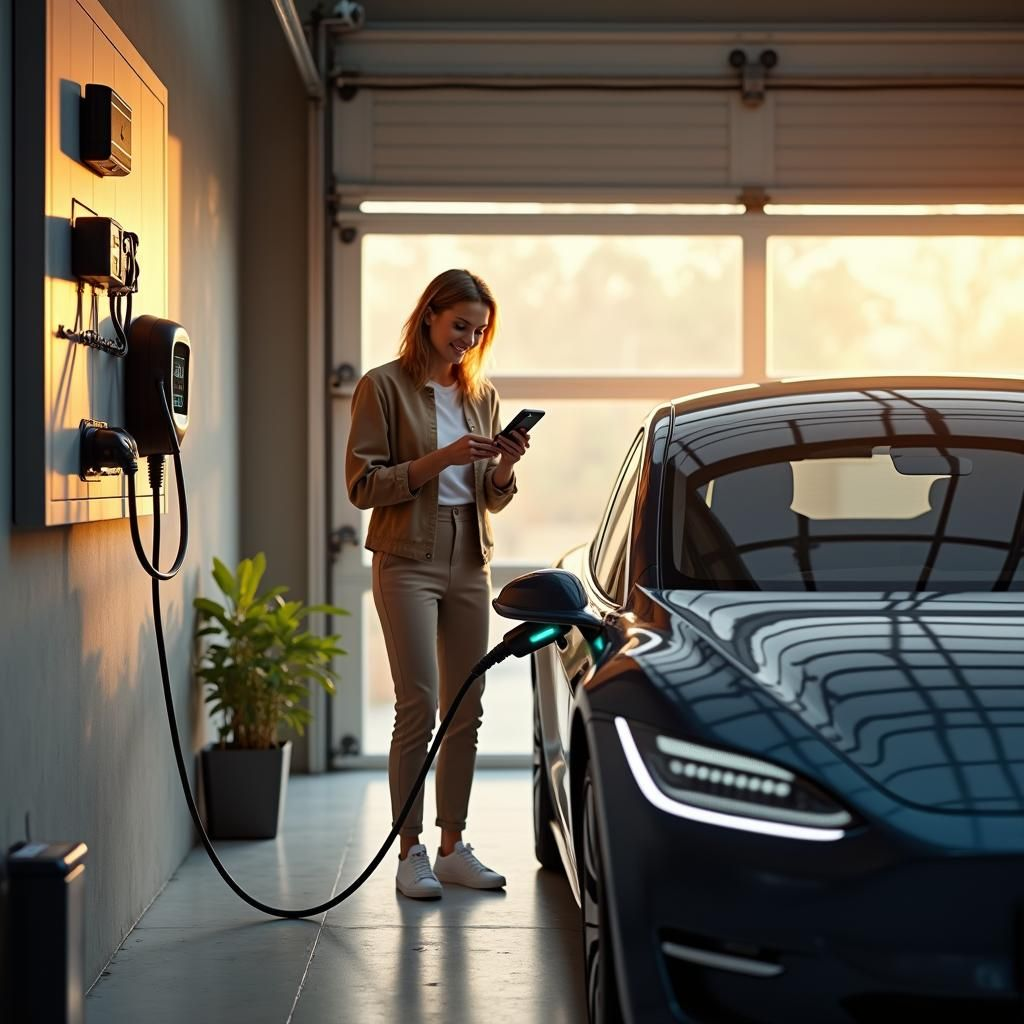
Buying an electric vehicle (EV) is exciting—you’ve said goodbye to oil changes and the stress of gas prices. But for many new owners, the first week brings a reality check the glossy brochure didn’t mention: The “gas station mindset” doesn’t work for EVs.
We’re used to waiting until the low-fuel light comes on and then hunting for a pump. With an EV, that habit leads to “range anxiety”—constantly checking your battery, hovering near public chargers, scrolling your phone in parking lots, and wondering if there’s a better way.
So the big question arises: Do you actually need a dedicated home EV charger, or is it just an expensive luxury? It’s not just about electricity—it’s about your time, your wallet, and how much mental energy you want to spend on your car. Let’s break it down.
1. Is Your Current Charging Setup Really Enough?
Most EV owners start with one of two methods: the "Trickle" (Level 1 charging) or the "Public Scavenge" (relying on local stations). While both are technically possible, they often come with hidden costs.
Level 1 Charging: Your Standard Wall Outlet
Every EV comes with a 120V cable that plugs into a normal household outlet. Convenient, right? But here’s what you might notice:
Slow: Gains only about 3–5 miles of range per hour.
Unreliable for daily use: Drive 40 miles today? You’ll need 10–12 hours to recharge fully.
Frustrating on weekends or road trips: Unexpected errands can leave you starting Monday with a “battery deficit.”
It’s like trying to fill a swimming pool with a garden hose. Technically possible—but painfully slow.
Public Charging: Not Always the “Quick Fix”
Relying on public chargers may seem convenient, but real-world experience tells a different story:
Waiting in line: Fast chargers can take 30–50 minutes for 80% charge.
Unreliability: According to a 2023 J.D. Power study, roughly 1 in 5 charging attempts fail due to broken equipment or software issues.
Price unpredictability: Public charging costs can vary, often 3x residential electricity prices, and you’re paying for their overhead too.
The takeaway: Both Level 1 and public charging can work, but they often come with hidden friction that slowly adds up.
2. What a Home EV Charger Really Does?
Think of a Home Level 2 charger not as a piece of industrial machinery, but as a high-speed bridge between your home’s electrical grid and your car.
By using a 240V circuit (the same kind your clothes dryer or oven uses), a Level 2 station adds 25–40 miles of range per hour.
The Smartphone Mindset: You don't wait for your iPhone to hit 0% before looking for a charger. You plug it in when you go to bed, and it’s at 100% when you wake up.
Seamless Integration: When you have a dedicated home setup, charging stops being a "chore" or a "destination." It becomes a 5-second habit: park, plug, walk inside.
It’s the difference between having a gas station in your garage versus having to hunt for one every three days.
3. Who Should Consider a Home Level 2 Charger?
If you find yourself in any of the following categories, a home charger isn't just a "nice-to-have"—it's the missing piece of the EV puzzle.
A. The Daily Commuter
If you drive more than 30 miles a day, the math is simple. You are consuming enough energy that a standard wall outlet will eventually fail to keep up. A Level 2 charger ensures that no matter how much you drove today, your car is "full" by 6 AM tomorrow.
B. The "Predictability" Seeker
If your schedule is packed—kids, meetings, gym—you cannot afford to spend 45 minutes at a charging station because you forgot to plug in. Home charging provides time certainty.
C. The Multi-EV Household
As more families swap their second gas car for an EV, the demand for "juice" at home doubles. A single Level 2 charger can easily rotate between two cars, topping both off overnight—something impossible with a standard outlet.
D. The Value Investor
If you plan on owning an EV for more than two years, the cost-per-mile savings of home charging (compared to public charging) will eventually pay for the hardware itself.
4. Who Might Not Need One?
We believe in being honest: a home charger isn't for everyone right now. You might be better off waiting if:
- You have free charging at work: If your employer provides free Level 2 charging, take advantage of it! You’re essentially getting a free "fuel" bonus every month.
- You’re a low-mileage driver: If you only drive 10 miles a day to the grocery store, a standard 120V outlet is actually sufficient.
- You’re in a temporary rental: If your landlord won't allow electrical upgrades, don't sweat it. The public infrastructure is growing rapidly. According to the Alternative Fuels Data Center (AFDC), there are now over 180,000 public charging ports in the US, and that number is climbing daily.

5. Cost & Investment Perspective
Let’s talk about the "Sticker Shock." A quality Level 2 charger plus installation usually costs between $800 and $2,000.
The ROI (Return on Investment)
Energy Costs: Residential electricity averages $0.16 per kWh, while public fast charging can exceed $0.48 per kWh. (Source: U.S. Bureau of Labor Statistics).
The Math: If you drive 1,000 miles a month, you could save roughly $80–$120 per month by charging at home. In less than two years, the charger has paid for itself.
Property Value: EV chargers are becoming a highly-coveted feature for home buyers. Think of it like a smart home upgrade—it adds modern appeal to your real estate.
The "Hidden" Discount: The 30C Tax Credit
The U.S. Federal Government wants you to do this. Under the Alternative Fuel Vehicle Refueling Property Credit (30C), you can claim a tax credit of 30% of the cost of hardware and installation (up to $1,000). This incentive has been extended through December 31, 2032. Check your local zip code, as many utilities also offer rebates that can bring your out-of-pocket cost down to nearly zero.
6. 4 Things to Consider Before Installing
Does my electrical panel have room? You’ll need a dedicated 40A or 50A breaker. An electrician can tell you in 5 minutes if your panel can handle the load.
Hardwired or Plug-in? A NEMA 14-50 plug offers flexibility—you can take the charger with you if you move. Hardwiring looks cleaner and often allows for higher charging speeds (48A vs. 40A).
Where is my port? Measure the distance from your panel to where your car’s port usually sits. Buying a charger with a 25ft cable (like our RippleOn) ensures you never have to "park perfectly" just to reach the plug.
Do I need a Permit? In most jurisdictions, a permit is required for 240V installs. This is crucial for your home insurance and the 30C tax credit.

7. The Final Verdict: Is It a Necessity?
For the "daily driver," a home EV charger is the difference between owning a car that works for you and working for your car. While you can survive on public charging, the friction eventually adds up. The peace of mind that comes with knowing your vehicle is always ready for an emergency, a long commute, or a spontaneous road trip is hard to put a price on.
If you drive more than 30 miles a day and have a place to park, a home Level 2 charger is the best investment you can make in your electric future.
8. Ready for a Smarter Way to Charge?
At RippleOn, we don't just see chargers as hardware; we see them as the heartbeat of your daily routine. We focus on reliability, ease of use, and rugged design that stands up to real-world conditions.
Whether you’re looking for a portable Level 2 solution for flexibility or a robust home setup, we’ve engineered our products to be "invisible"—they just work, so you can focus on the drive.


Leave a comment
This site is protected by hCaptcha and the hCaptcha Privacy Policy and Terms of Service apply.