


What's the Real Cost to Install an EV Charger at Home?
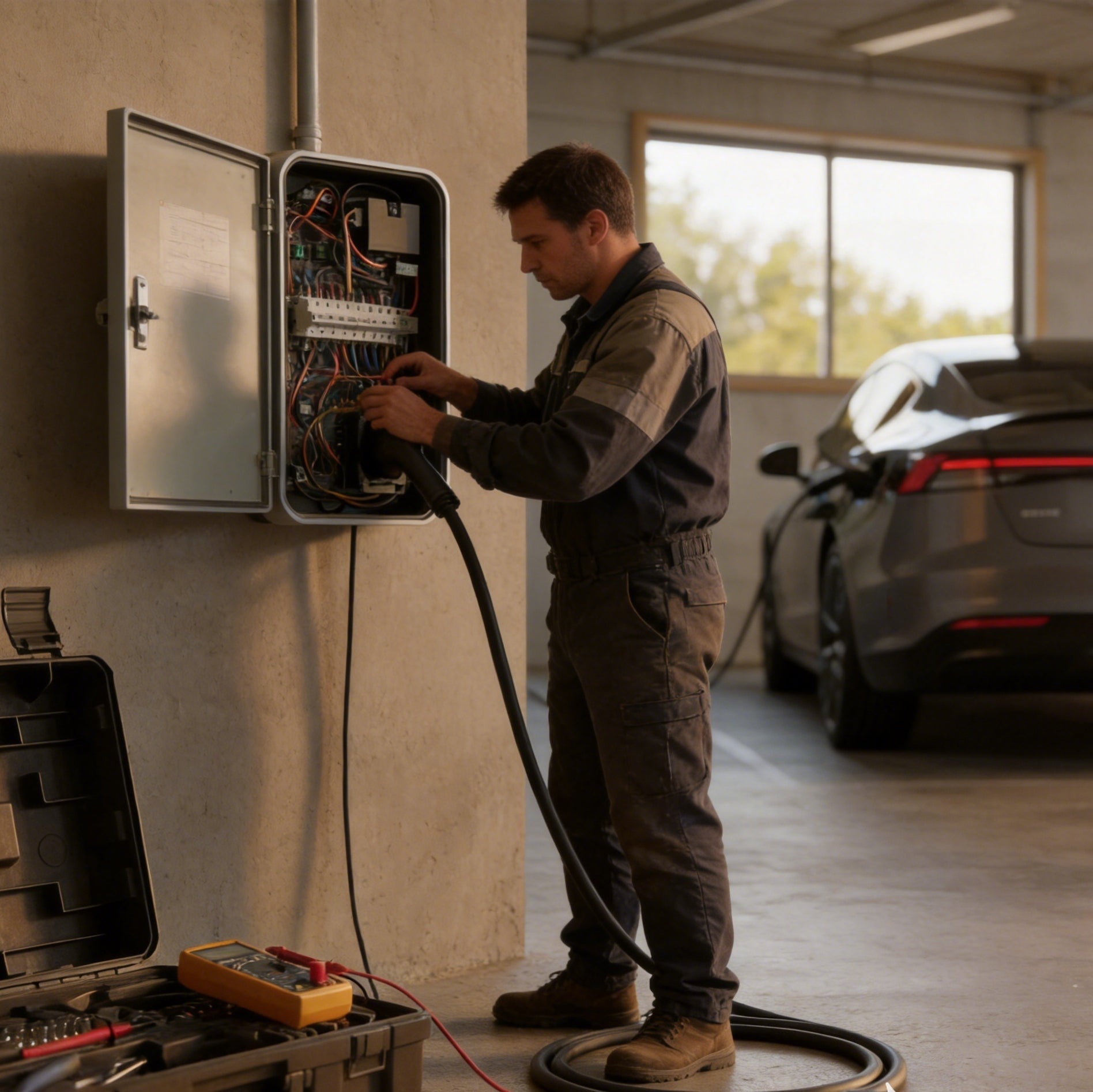
For EV owners who'd rather start each morning with a full battery, setting up a Level 2 charger at home is the logical upgrade. Ditching the public charging detour for overnight home charging is a game-changer, but before anything goes on the wall, the budget question comes first.
The cost to install an EV charger at home varies based on your electrical setup, charger location, and local permitting requirements. In this guide, we'll break down each piece so you know exactly what to expect before you get a quote.
Level 1 vs. Level 2: Which One Actually Works for Daily Life?
A Level 1 charger plugs into a standard 120-volt outlet and adds roughly 3–5 miles of range per hour, which is workable for very light use but slow for most drivers. Meanwhile, a Level 2 charger runs on a 240-volt circuit and delivers 20–50 miles of range per hour, allowing a full charge overnight without scheduling around it.
That speed difference is why Level 2 has become the standard for home charging. For most EV owners, it's the setup that actually fits into a real daily routine: plug in when you get home, wake up to a full battery, repeat. And it's the setup we're focused on here.
Cost to Install a Level 2 Charger at Home: What to Expect
The total cost of an EV home charger installation typically falls between $1,000 and $3,500. Homes that need a panel upgrade or a longer wire run can climb to $4,000 or more. Here's where the money generally goes:
| Cost Component | Estimated Range |
|---|---|
| Charger hardware | $300 – $1,999 |
| Labor & installation | $500 – $1,500+ |
| Permits | $50 – $300 |
| Panel upgrade (if needed) | $1,000 – $5,000 |
A simple garage install near your panel can come in well under $1,500. A more complex setup, such as a detached garage, long wire run, or older panel, lands toward the higher end. A quote from a licensed electrician is the most reliable way to pinpoint your number.
Factors That Affect Wall Charger Installation Cost
Your Electrical Panel's Capacity
Level 2 chargers need a dedicated 240-volt circuit, and whether your panel can accommodate one without an upgrade is the biggest cost variable. Older homes with 60- or 100-amp panels may require an upgrade, while many newer 200-amp panels have plenty of room to spare.
Distance From the Panel to the Charger Location
Electricians typically charge $10–$20 per linear foot for wiring, so the farther the charger is from the panel, the more it costs. Routing through finished walls or underground to a detached garage adds noticeably more than a short open-wall run.
Hardwired vs. Plug-In Setup
Hardwired installations deliver up to 48 amps (11.5 kW) and are the preferred choice for permanent setups. A plug-in NEMA 14-50 connection caps at 40 amps (9.6 kW), but costs less when a compatible outlet is already installed. The RippleOn Level 2 Charger supports both options, so you can configure it for your home.
Indoor vs. Outdoor Installation
Indoor garage installs are the simplest and most affordable. Outdoor setups require weatherproof conduit and UV-rated materials, adding a few hundred bucks to the project.
Permits and Inspections
Most municipalities require a permit for 240-volt circuit work. Skipping it can cause complications during a home sale or with your insurance. Typically, your electrician handles the application as part of the job.
How to Lower Your Cost to Install a Charging Station at Home
The Federal 30C Tax Credit
Qualifying homeowners can claim 30% of hardware and installation costs, up to $1,000, via IRS Form 8911. This credit expires June 30, 2026. Eligibility depends on your census tract location, so verify with the DOE's mapping tool and confirm with a tax professional.
State and Utility Rebates
Many utilities and state programs stack additional rebates on top of the federal credit, ranging from $200 to $1,000 or more. Check your local utility's website and the Database of State Incentives for Renewables & Efficiency (DSIRE) for what's available in your area.
Starting With the Right Charger
Energy Star-certified chargers, like the RippleOn Level 2 EV Charger, tend to qualify for the widest range of rebates. Beginning with well-priced, certified hardware is one of the most straightforward ways to bring the true cost to install an EV charger at home down.
Ready to Run the Numbers?
Home EV charging pays off in ways that go beyond convenience. Think of lower fueling costs, reduced wear from slower overnight charging, and a home that's ready for wherever EV technology goes next. The upfront investment is real, but with the right planning, it's also very manageable.
If you're looking for a solid starting point, our Level 2 EV Charger at RippleOn is Energy Star-certified, flexible in its installation, and priced to keep hardware costs reasonable. It's a simple setup built for the long haul, and a great first step toward making home charging a permanent part of your routine.
Frequently Asked Questions
How much does it cost to have a charging station in your house if I rent it?
Hardwired installs usually require landlord approval, so a plug-in charger connected to an existing NEMA 14-50 outlet is the more practical route. The wall charger installation cost drops significantly when a compatible outlet is already in place.
How much is it to install a charging port at home in a condo or apartment?
Shared electrical infrastructure and HOA approval requirements make multi-family installs more complex and sometimes more expensive. Getting clarity on your building's policies early determines which options are even on the table.
Does a Level 2 charger require its own dedicated circuit?
Yes. It's a firm code requirement, not a suggestion. NEC Article 625 mandates a dedicated 240-volt circuit sized to the charger's amperage for safety.
How long does a typical Level 2 home charger installation take?
Straightforward installs wrap up in 2–4 hours. Panel upgrades, outdoor trenching, or long conduit runs can add 1–3 days to the job.
Will my homeowner's insurance be affected by adding an EV charger?
Properly permitted work generally doesn't cause coverage issues, but notifying your insurer is a good habit. Some policies require permit and inspection documentation for high-amperage electrical additions.
Leave a comment
This site is protected by hCaptcha and the hCaptcha Privacy Policy and Terms of Service apply.