



Electric vehicles are becoming an increasingly familiar sight in American households, and many owners quickly discover that charging at home is far more convenient than relying on public stations. A properly planned home charging station installation allows drivers to recharge overnight, maintain consistent battery levels, and start each day with a fully charged vehicle.
However, installing an EV charger involves more than mounting equipment on a garage wall. Electrical capacity, wiring standards, and component quality all influence how well the system performs over time. Homeowners who overlook these details can face safety issues, inefficient charging, or costly upgrades later. In this article, we will highlight common installation mistakes and explain how to avoid them.
Key Takeaways
-
A properly planned home charging station installation requires the correct wire gauge and breaker sizing to handle continuous charging loads safely.
-
Level 2 EV chargers should always operate on a dedicated circuit with wiring and breakers matched to the charger’s amperage rating.
-
Before installation, electricians should evaluate electrical panel capacity through a load calculation to confirm the system can support the new circuit.
-
High-quality outlets, breakers, and conduit help prevent overheating, electrical faults, and long-term reliability issues.
-
Choosing a certified EV charger designed for indoor or outdoor use helps maintain safe and consistent charging performance.

Why Does Your Home Charging Station Installation Matter More Than You Think?
A residential EV charger draws a substantial electrical load, often running continuously for several hours during overnight charging. Because of this sustained demand, the electrical system supporting a home charging station installation must be designed correctly from the start.
What Are the Real Risks of Improper EV Charger Installation?
When an EV charger is installed without proper planning, problems can appear quickly. Incorrect wire sizing, overloaded circuits, or poorly rated components may cause breakers to trip, wires to overheat, or charging sessions to stop unexpectedly.
Beyond inconvenience, electrical faults also increase the risk of equipment damage or fire hazards. EV chargers draw a continuous load that stresses electrical components more than many household appliances, so installation quality directly affects long-term reliability.
How Much Does a Typical Home Charging Station Installation Cost?
Costs vary depending on the required electrical upgrades. When the electrical panel has enough capacity, and the charger is installed close to the panel, a straightforward installation may cost several hundred to around $1,500 for labor and materials.
More complex projects can cost $2,000 or more if the installation requires panel upgrades, longer wiring runs, trenching, or additional electrical work. Plan the project carefully before beginning a home charging station installation to avoid unexpected costs later.
Mistake #1 — Using the Wrong Wire Gauge for EV Charging
Electrical wiring is one of the most critical elements of any home charging station installation. When wiring is undersized, it may overheat during extended charging sessions. If the wiring is oversized unnecessarily, installation costs can increase without providing meaningful benefits. Proper wire sizing keeps the charger operating safely while supporting the electrical load required for Level 2 charging.
What Wire Gauge Does a Level 2 EV Charger Actually Require?
Most Level 2 EV chargers operate at 30–60 amps, depending on the charger model and the vehicle’s onboard charging capacity. Because of this range, the wire gauge must be matched carefully to the circuit rating.
Typical residential installations use copper wiring in the following sizes:
-
30-amp circuit: 10-gauge copper
-
40-amp circuit: 8-gauge copper
-
50-amp circuit: 6-gauge copper
-
60-amp circuit: 4-gauge copper
Another factor that affects wire sizing is the distance between the electrical panel and the charger. Longer wire runs may require a larger gauge to reduce voltage drop and maintain efficient charging performance. Electricians often account for these distances during installation planning to avoid charging inefficiencies.
The 80% Continuous Load Rule
Electric vehicle chargers fall under the continuous load category in the National Electrical Code. According to NEC 210.20, circuits supplying continuous loads must be sized so that the load does not exceed 80% of the circuit’s rating.
For example, a charger delivering 40 amps typically requires a 50-amp circuit. Both the breaker and wiring must support that rating to maintain safe operating temperatures during long charging sessions.
Homeowners sometimes underestimate how long EV chargers operate. A vehicle charging overnight may draw power for six to eight hours or longer. If wiring is undersized or mismatched with the breaker rating, heat buildup can occur inside the conduit or the walls. Correct wire sizing helps maintain safe conditions throughout the lifespan of the system.
Mistake #2 — Skipping a Dedicated Circuit for Your EV Charger
A Level 2 charger should always operate on its own circuit connected directly to the electrical panel. Attempting to share a circuit with other appliances is one of the most common mistakes during a home charging station installation.
Why Your EV Charger Needs a Dedicated Circuit
EV chargers draw a large and sustained electrical load. If the charger shares a circuit with other devices such as garage outlets, dryers, or workshop equipment, the combined load can easily exceed the circuit’s capacity. When this happens, frequent breaker trips or interruptions during charging may occur. Voltage fluctuations may also slow charging speeds or affect charger performance.
A dedicated circuit isolates the EV charger from other household loads, letting the breaker protect the system properly. Many residential installations use 40-amp or 50-amp breakers, though the correct rating ultimately depends on the charger’s power output.
Installing the charger on its own circuit provides consistent power delivery while reducing stress on the home’s electrical system.
Mistake #3 — Ignoring Electrical Panel Capacity Before Installation
Even when wiring and circuit design are correct, a charger still depends on the electrical panel’s ability to supply enough power.
Why Load Calculations Matter for EV Charger Installations
Prior to a home charging station installation, electricians often perform a load calculation. This process evaluates the total electrical demand of the home by accounting for lighting, appliances, HVAC systems, and other equipment connected to the panel. The purpose of this calculation is to determine whether the panel can safely support the additional load created by an EV charger.
Several warning signs may indicate that a panel is already operating near its capacity. These include:
-
Limited open breaker slots
-
Frequent breaker trips
-
Older electrical panels rated below 100 amps
-
Multiple high-power appliances operating simultaneously
If the panel cannot safely support the new circuit, electricians may recommend installing a subpanel, upgrading the main panel, or using load-management equipment that balances power usage.
Planning these adjustments early helps avoid delays and prevents problems once the charger is in use.
Mistake #4 — Compromising on Outlet, Breaker, and Conduit Quality
Electrical components supporting an EV charger must withstand long charging sessions and significant electrical loads. Choosing low-quality components can create problems that appear months or years after installation.
The Importance of High-Quality Electrical Components
Low-grade outlets, breakers, and connectors may degrade under continuous electrical loads. Over time, this can lead to loose connections, overheating, or electrical arcing.
Many Level 2 chargers connect to NEMA 14-50 outlets, which are designed to handle higher-amperage loads commonly used for EV charging. In other installations, chargers may be hardwired directly to the electrical panel, eliminating the outlet entirely and providing a permanent connection.
The circuit breaker must also match the charger’s amperage rating. Breakers act as the system’s primary safety device, interrupting power when current exceeds safe limits.
Conduit plays another important role in protecting the wiring that supplies the charger. Electricians often install wiring inside:
-
PVC conduit for residential environments
-
Electrical metallic tubing (EMT) for exposed runs
-
Weather-rated conduit when wiring runs outdoors
Using durable materials keeps the wiring protected from physical damage, moisture, and environmental exposure throughout the lifespan of the charger.
Mistake #5 — Buying an Uncertified or Poorly Rated EV Charger
Even when installation work is done correctly, the charger itself must meet recognized safety standards.
The Role of UL and ETL Certification in EV Charger Safety
EV chargers should carry certifications such as UL listing or ETL certification. These marks confirm that the equipment has undergone independent safety testing and complies with established electrical standards.
Chargers without these certifications may not meet electrical safety requirements, creating reliability issues or potential hazards. Certified equipment provides greater confidence that the charger can handle the electrical loads associated with regular EV charging.
Indoor vs. Outdoor Chargers and Weather Protection
Many residential chargers are installed in garages, but others are mounted outside due to limited indoor space. During a home charging station installation, outdoor environments introduce additional considerations such as temperature changes, humidity, and exposure to dust or rain.
Chargers built for outdoor use typically include weather-resistant enclosures and durable internal components that enable them to operate across a wider temperature range.
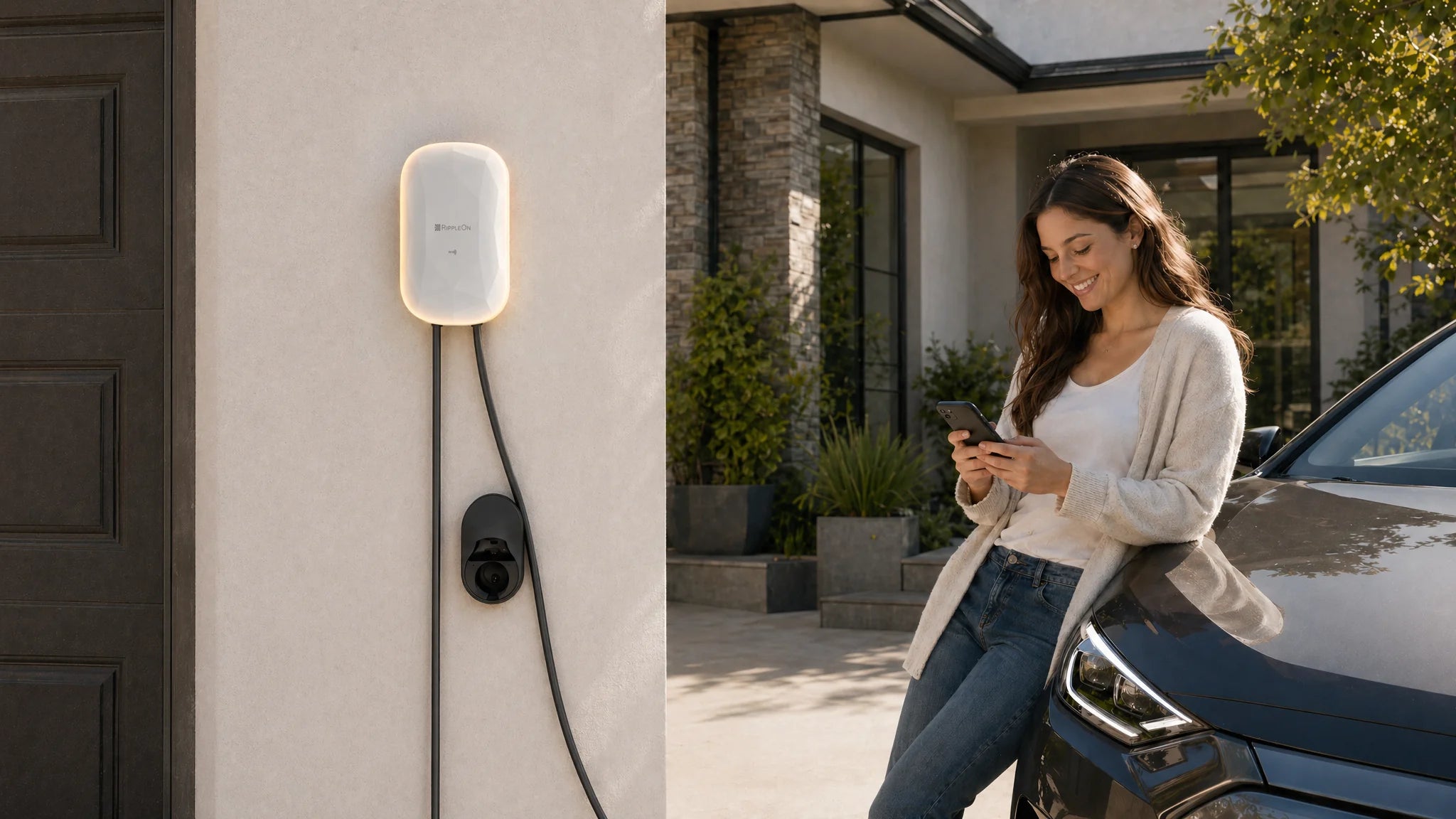
For those seeking reliable equipment, the RippleOn Level 2 EV Charger is designed to operate in a variety of climates. Its durable construction supports both indoor and outdoor installations while maintaining dependable charging performance across changing weather and temperature conditions.
How Do You Choose the Right Level 2 Charger for Your Home?
Not all Level 2 chargers offer the same performance or features. When planning a home charging station installation, choose equipment that aligns with your home’s electrical setup and your typical charging needs.
What Features and Power Levels Should You Look For?
Most homeowners go for chargers that deliver 32 to 48 amps of power, which provides fast overnight charging for most electric vehicles while remaining compatible with typical residential electrical systems.
Electricians can help determine the ideal charger output based on the home’s electrical panel capacity and driving habits. Many modern chargers also include features that can help you manage charging sessions and track electricity usage more easily, such as:
-
Wi-Fi connectivity for remote monitoring
-
Charging schedule controls
-
Mobile app integration
-
Energy usage tracking
Get Your Home Charging Station Installation Right
Installing an EV charger at home offers significant convenience, but the process requires careful planning. Wire sizing, dedicated circuits, panel capacity, and component quality all play a role in a safe and efficient home charging station installation. Avoid the common mistakes outlined above to maintain reliable charging and avoid costly electrical upgrades later.
Reliable equipment also makes a difference in a successful installation. At RippleOn, we offer charging solutions designed for modern EV charging needs, including the RippleOn Level 2 EV Charger. If you have questions about choosing the right charger or planning your installation, feel free to contact us to get started!


Leave a comment
This site is protected by hCaptcha and the hCaptcha Privacy Policy and Terms of Service apply.