


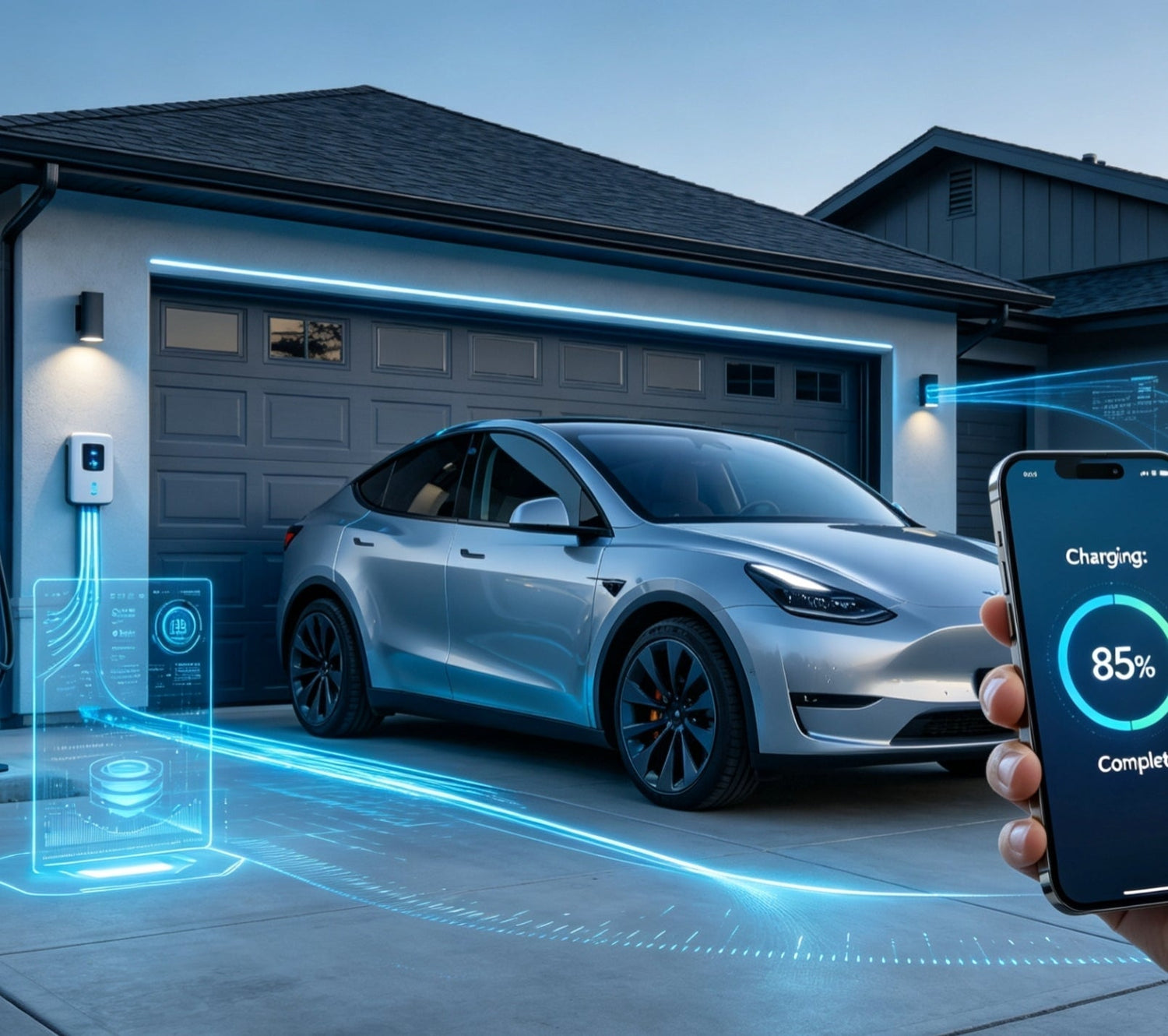
When EV owners start looking into home charging, one question comes up pretty quickly: Do I really need a smart EV charger, or will a basic one do just fine?
If you’ve recently bought or are planning to buy an EV, it’s worth understanding what makes a smart charger different. Below, we’ll walk through the key features and help you decide what’s right for your home.
What Does “Smart EV Charger” Actually Mean?
A basic charger is simple: it delivers electricity to your car and stops when the car is full. That’s about it.
However, a smart EV charger allows for efficient management and control of your car’s charging process. It typically connects to an app that offers real-time control, scheduling, and monitoring features. Over time, these features can lead to significant savings and enhanced convenience.
Core Features That Make an EV Charger “Smart”
Real-Time Charging Control via App
Through a dedicated app, you can monitor your active charging session from anywhere, whether you're at home or across town.
You can pause charging when you need to free up capacity for other appliances, resume it remotely when rates drop. You can also set different charge limits for specific days of the week. For example, you may want to charge fully on weekdays and keep it at 80% on weekends.
Automated Scheduled Charging
Through app-based control, rather than plugging in manually at a particular time, smart EV chargers allow you to set a charging window once and let the system handle the rest.
This becomes especially useful in everyday situations. Whether you forget to plug in earlier, want to pause charging during peak hours, automated scheduling ensures that your vehicle charges cost-effectively and meet your personal needs.
More Control Over Your Energy Use
Smart chargers provide insight into your usage, which empowers you to make smarter decisions about energy consumption.
- Track your historical charging sessions, so you know how much power your EV has used over the past week or month.
- This data helps you adjust your charging habits to be more energy-efficient and cost-effective.
Smart Safety Protection
A smart charger is equipped with necessary safety protections to ensure the charger remains safe to use. The charger self‑monitors, self‑adjusts, and automatically recovers when safe conditions return.
It is especially important in homes with limited electrical capacity, where unmanaged charging could lead to overload risks.

How Smart EV Chargers Save You Time and Money?
Automatic Charging for Busy Lifestyles
A smart EV charger can automatically charge your vehicle based on your schedule. Whether you’re rushing to work or have a busy evening ahead, set it once and your vehicle will charge during the most cost-efficient hours automatically. Thus you don't need to worry about when to plug in.
Avoid Peak-Hour Charging Costs
With automated scheduling, your vehicle charges during off-peak hours, when electricity rates are at their lowest. This could save you up to several hundred dollars annually compared to peak-hour or public fast charging.
Additionally, some smart chargers also integrate with utility demand response programs, which automatically pause or delay charging when grid prices spike to avoid more costs.

Are There Any Other Benefits of Smart EV Chargers?
Do Smart EV Chargers Impact Battery Health?
Maintaining an optimal charge level is crucial for extending your EV battery's lifespan.
- Prevents Overcharging: With a smart charger, you can set limits on the maximum charge level to prevent overcharging, which can degrade the battery over time.
- Prevents Deep Discharge: A smart charger will also prevent deep discharges, ensuring that the battery doesn’t run down too low, which could damage the battery and reduce its overall lifespan.
This not only helps save costs on battery replacements but also enhances vehicle performance in the long run.

Do Smart EV Chargers Benefit The Environment?
Optimizing Energy Use for a Greener Home
By integrating with solar panels or home energy systems, many smart chargers allow you to use clean, renewable energy to charge your vehicle. Charging during the day with solar energy can further reduce grid dependency and make your home more sustainable.
Reduced Carbon Emissions with Smart Features
By charging your EV during off-peak hours, when there’s less demand on the grid, smart chargers help balance electricity usage, leading to lower carbon emissions. This is especially important if your grid relies on fossil fuels for electricity generation.

So, Do You Actually Need a Smart EV Charger?
The short answer: not always—but for many drivers, it makes their life much convenient.
If charging for you is occasional or temporary, and there’s no need to optimize for cost or automation, a simpler setup may be enough. However, over time, as charging becomes part of your daily routine, limitations tend to show up.
For frequent drivers, especially those with daily commutes, smart features like scheduling, monitoring, and automation can significantly improve the experience. It turns charging into something predictable rather than something you have to manage manually.
How to Choose the Right Smart EV Charger for Your Home?
Choosing the right smart EV charger involves assessing your home’s needs, the charger’s features, and its future adaptability.
What Should You Check Before Buying a Smart EV Charger?
1. Electrical Panel Capacity
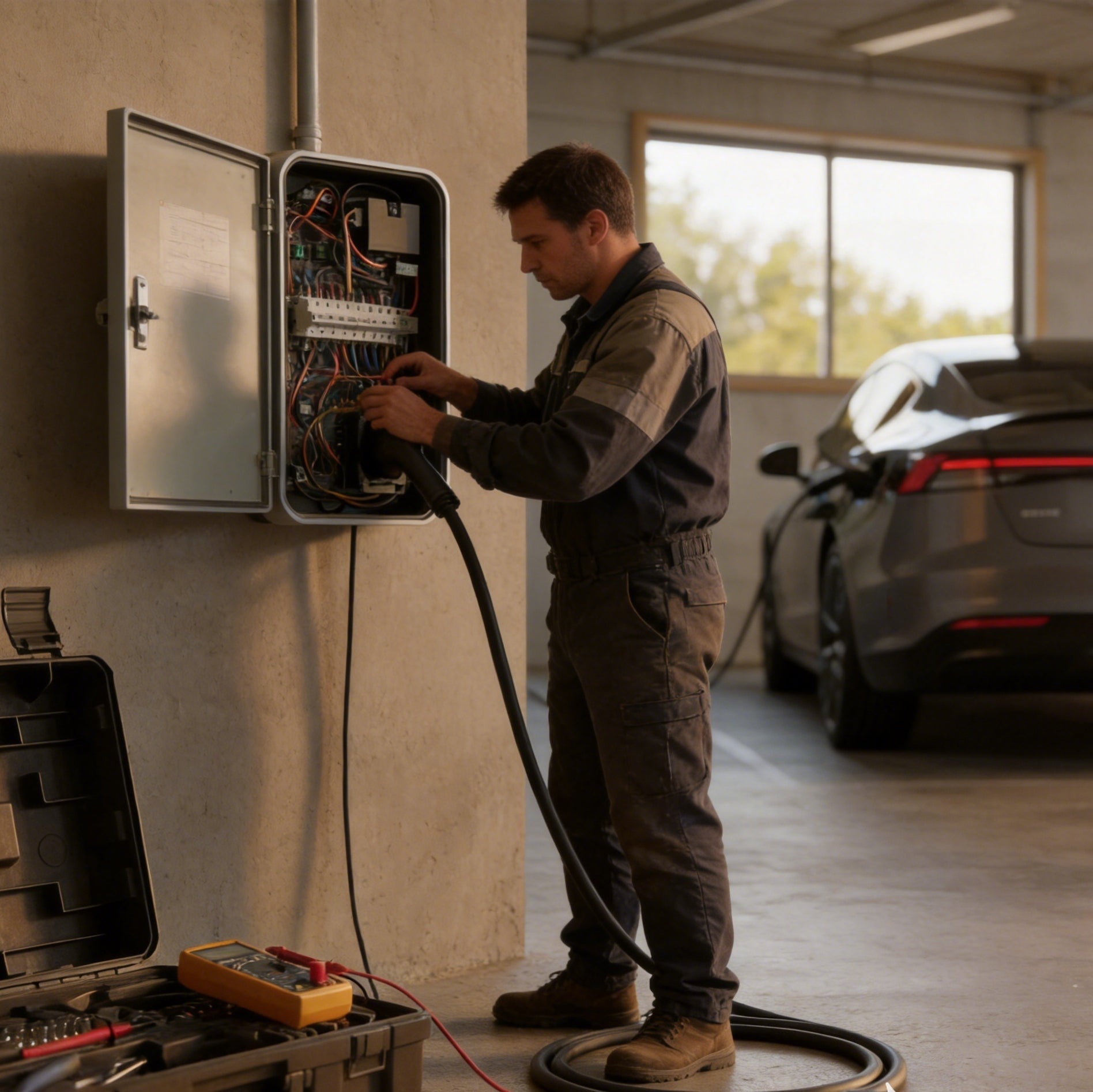
Before buying a charger, check your home’s electrical panel capacity to ensure it can support the additional load without requiring upgrades. If your panel is outdated or undersized, you may need to plan for an upgrade.
2. Compatibility with Charging Needs
Evaluate if the charger’s smart features (like scheduling, energy tracking, or load management) fit your usage habits. Do you need to charge at specific times, or will the charger need to handle peak loads in your area?
3. Rebates & Incentive Programs
Check if your local utility offers rebates or incentives for EV charger installations. Some chargers are eligible for discounts or rebates, which can lower your overall cost.

What Are Essential Features for Smart EV Chargers?
1. Basic Features
At a minimum, the charger should offer:
- App control for remote access
- Scheduled charging to optimize energy use
- Energy usage tracking to monitor consumption
2. Advanced Features
- Load management: Essential if your home has a limited electrical supply. This helps prevent overloads and optimizes energy distribution for efficiency.
- Fast charging: This feature allows you to charge your EV much faster compared to standard chargers, which is perfect for users with busy schedules.
3. Ease of Use
Choose a charger with a simple, reliable interface. A straightforward setup and user-friendly app ensure smooth operation and minimize frustration.

Does Brand Reliability and Support Matter?
1. Warranty & Support
A solid warranty and responsive customer support are essential. In case of issues or setup difficulties, good support ensures you're not left troubleshooting alone.
2. Long-Term Usability
A charger with connected features and the ability to receive software updates will stay relevant as EV technology evolves. This future-proofing is important to avoid obsolescence.
Does Future-Proofing Matter?
1. Upgradable Amperage
As your household energy needs increase, ensure the charger can support higher amperage in the future. This avoids the need for replacing the charger if you upgrade your home’s electrical system.
2. Software Updates
Choose a charger that can receive software updates. This ensures you get access to improvements and new features as technology advances.
3. Solar & Energy System Integration
If you plan to integrate your charger with solar panels or a home energy system, ensure it is compatible. This adds another layer of energy efficiency and sustainability to your home.

Why RippleOn Level 2 EV Chargers Stand Out in "Smart"?
Real-Time Charging via the RippleOn App
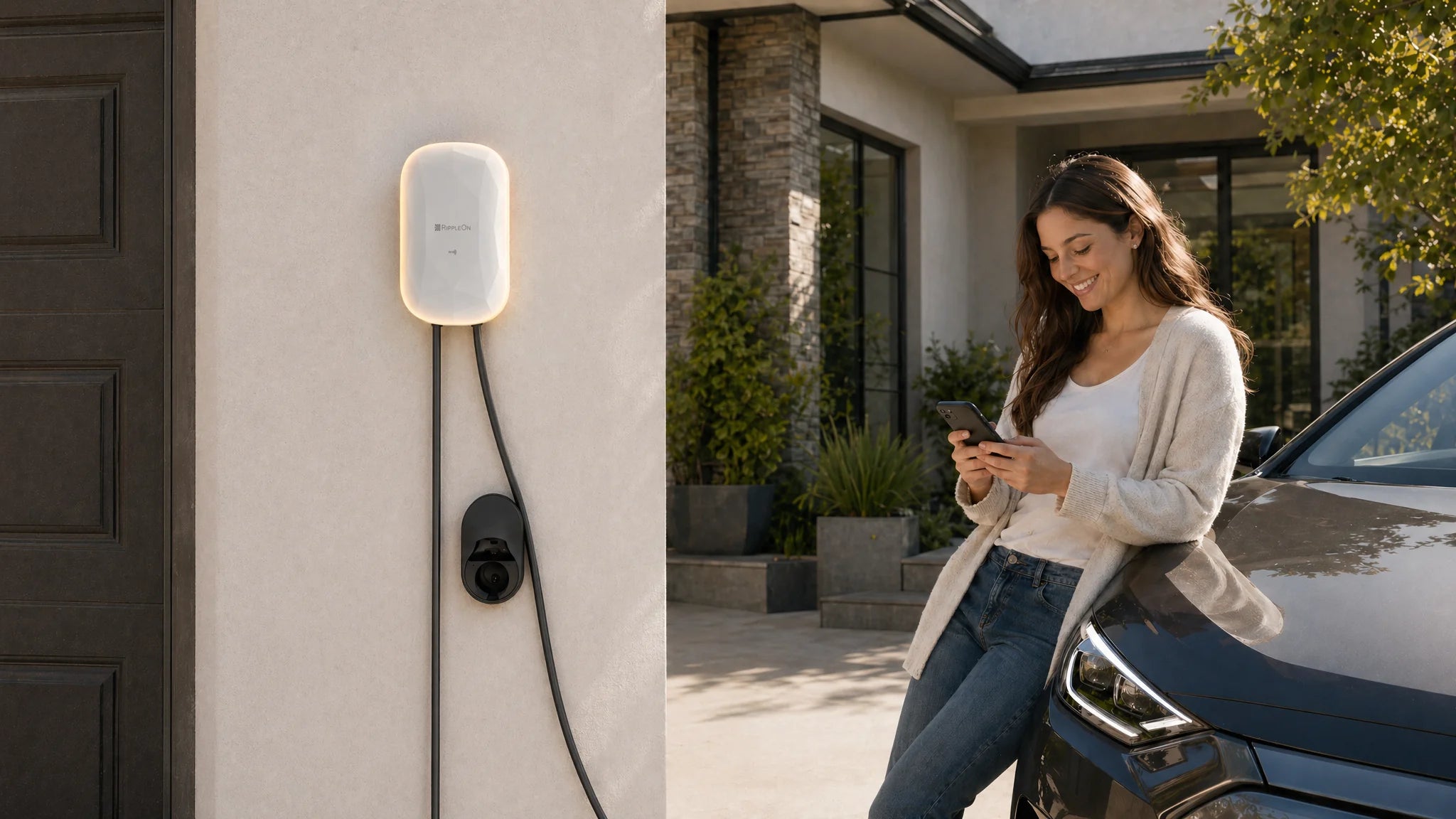
With the RippleOn app, you can keep track of your entire charging process no matter where you are. You can monitor real-time power usage, pause or resume charging, and set custom charge limits all from your phone.
Automated Scheduling for Off-Peak Energy Savings
RippleOn’s charger supports automated scheduling, allowing your vehicle to charge during off-peak hours when electricity rates are lower. Once set, the system runs automatically—no need to manually adjust charging times each day.
Built-In Load Management for Smarter Power Use
RippleOn integrates dynamic load management to automatically adjust charging based on your home’s real-time energy usage. This helps prevent overload while maximizing available capacity, and in many cases can eliminate the need for costly panel upgrades.
Designed for Everyday Reliability and Safety
With intelligent protection systems, the charger continuously monitors operating conditions and adjusts when needed. This reduces risks like circuit overload and ensures stable performance even during peak household usage.

Final Thoughts
A smart EV charger isn’t just about adding features—it’s about improving how charging fits into your daily life.
If convenience, cost savings, and long-term flexibility matter to you, a smart charger is usually the better investment.
For simpler use cases, a basic charger may still get the job done.
The key is understanding your current needs—and how they might evolve in the future.

Leave a comment
This site is protected by hCaptcha and the hCaptcha Privacy Policy and Terms of Service apply.