


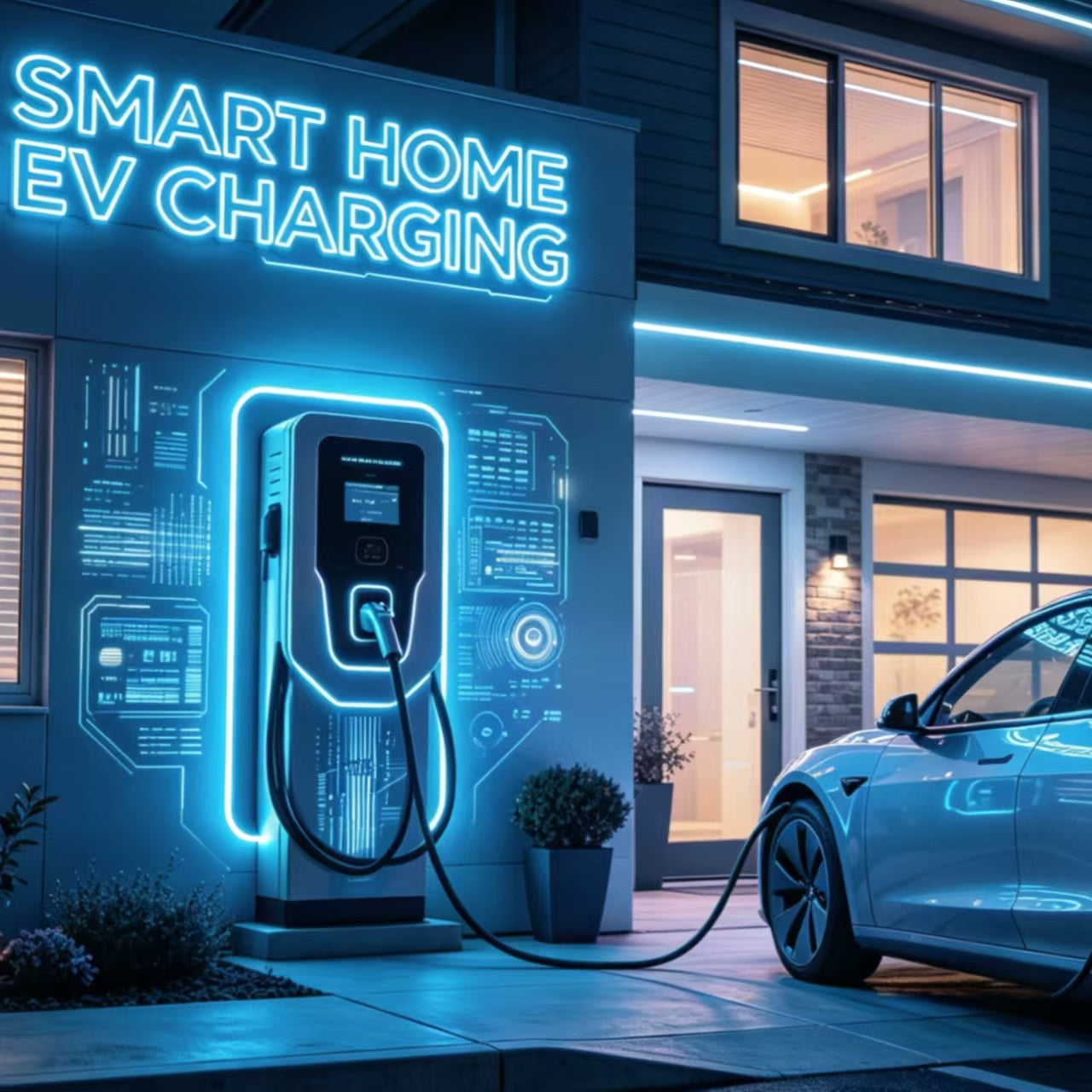
As EV adoption continues to grow, more drivers are asking the same question: Is it better to rely on public EV charging stations, or install a smart EV charger at home?
For many new EV owners, public charging feels like the easiest starting point. Searching for “charging stations near me” or stopping at a Tesla Supercharger quickly becomes part of the routine.
But over time, many drivers begin moving toward smart home charging instead. The reason is simple: while public charging offers convenience in certain situations, smart home EV charging usually provides better daily charging experience.
Why Public EV Charging Feels Convenient at First
Public Charging Makes Early EV Ownership Easier
For many first-time EV drivers, public charging stations reduce range anxiety early on.
Apps make it easy to search for “EV charging stations near me”, while public fast chargers and Tesla Superchargers allow drivers to quickly recharge during busy days or long trips.
Fast Charging and Superchargers Feel Convenient
DC fast charging and Tesla Superchargers are impressive technologies. In many situations, they’re essential, especially during road trips or long-distance driving.
Compared to Level 1 charging, fast charging stations nearby can add significant range quickly and reduce downtime while traveling.
But convenience on occasional trips doesn’t always translate into the best daily charging experience.
Why Public EV Charging Becomes Less Practical Over Time
Public Charging Can Become Inconvenient for Daily Driving
At first, stopping at an EV charging station may not feel like a major issue. But over time, many drivers realize they are planning their routines around charger availability.
Common problems include:
- Broken or offline chargers
- Long wait times
- Inconsistent charging speeds
Waiting for an open charger, driving to another location, or dealing with occupied charging stations gradually becomes inconvenient for daily use.
Public Charging Usually Costs More
Depending on the network and location, public charging can range from $0.30 to $0.60 per kWh and DC fast charging is usually the most expensive option.
While convenient for road trips or emergencies, public charging usually costs significantly more than home charging.
Frequent Public Fast Charging Can Accelerate Battery Wear
Most public charging relies on DC fast charging or superchargers. While modern EV batteries are designed to support fast charging, repeated exposure to high charging speeds and heat can contribute to faster battery degradation and reduced long-term battery efficiency.
For everyday charging, slower overnight Level 2 charging at home is generally considered gentler on battery health.
Why Smart Home Charging Changes the EV Ownership Experience
Convenience of Overnight Charging at Home
Instead of searching for “electric car charging stations near me”, drivers simply plug in at home and wake up with a charged vehicle each morning.
Over time, charging becomes less of a task and more of a background routine.
Smart features Makes Home EV Charging Easier
A smart EV charger adds another layer of convenience with smart features like:
- Scheduled charging
- App control
- Remote monitoring
- Energy tracking
With app-based smart control, EV owners can remotely monitor charging sessions, start or stop charging, schedule overnight charging, and track electricity usage directly from their phone.
Smart home charging always makes daily EV charging simpler, more efficient, and easier to fit into everyday life.
Lower Charging Costs Over Time
Off-Peak Charging Helps Lower Electricity Bills
Many utilities offer lower overnight electricity rates. With smart monitor, smart home chargers can automatically shift charging to off-peak hours, helping reduce overall charging costs over time.
Home Charging Usually Costs Less Per Mile
Compared to public fast charging, residential electricity rates are often significantly cheaper. For frequent drivers, the savings can become substantial over the course of a year.
Rebates and Incentives Help Reduce Installation Cost
Many utility companies and state programs offer rebates for EV charger installation. Some incentives help offset both hardware and installation expenses, especially for smart Level 2 EV chargers.
Long-Term Savings Matter More Than Upfront Cost
While installing a home EV charger requires an upfront investment, many EV owners eventually spend less overall compared to relying heavily on public charging stations.
Reliability of Smart Home Charging
A dependable smart home EV charger provides consistent overnight charging without the uncertainty, making daily charging simpler and far more predictable over time.
Reliability Matters More Than Maximum Charging Speed
For most EV owners, reliability eventually becomes more important than maximum charging speed. A smart charger that works consistently every night is often more valuable than finding the fastest charging station available.
Home Charging Avoids Broken or Occupied Charging Stations
A charging station may appear available in the app, only to be occupied, offline, or charging far slower than expected when you arrive.
With smart home EV charging, that uncertainty disappears. Your charger is always accessible, and overnight charging becomes part of your normal routine instead of something you need to plan around.
Can Smart Home Charging Replace Public Charging Completely?
For most EV owners, smart home charging eventually becomes the primary charging method. However, public charging stations still play an important role in certain situations.
Public Charging Still Makes Sense in Certain Situations
Public charging stations remain essential for road trips, long commutes, and emergency charging situations.
When drivers need to quickly add range during travel, DC fast charging is still the most practical solution.
For apartment residents or drivers without access to home EV charger installation, public charging may also remain part of the daily routine.
The Ideal Combination of Home Charging and Public Charging
For most households, the best setup is a combination of overnight home charging and occasional public charging when needed.
Daily charging happens at home where costs are lower and charging is more reliable, while public charging stations provide flexibility during longer trips.
What to Consider Before Installing a Smart EV Charger
Electrical Panel Capacity and Power Availability
Before installing a Level 2 EV charger, it’s important to check whether your electrical panel can handle the additional continuous load.
Older homes or smaller panels may require load calculations or energy management solutions before installation.
Plug-In vs Hardwired EV Charger Installation
Some homeowners prefer NEMA 14-50 plug-in flexibility, while others choose hardwired EV charger installation for long-term stability and cleaner installation.
Smart Features That Improve Daily Charging
Not all smart EV chargers offer the same experience. Features like app control, charging schedules, energy monitoring, and remote charging management can make daily charging much more convenient and cost-efficient over time.
Installation Quality and Safety Standards
A reliable EV charger installation depends heavily on proper wiring, breaker sizing, and safety-certified equipment.
Choosing a UL-certified EV charger and working with a qualified electrician helps ensure safer and more stable charging.
Wrapping Up
While pblic EV charging stations remain important for long-distance travel and occasional fast charging, for daily driving, smart home charging is simpler, more cost-effective, and significantly more reliable.
Instead of constantly searching for charging stations near me, home charging allows drivers to charge overnight, reduce costs, and make EV ownership feel more effortless over time.
Power Your EV Smarter with RippleOn
RippleOn's smart home EV chargers are designed for reliable overnight charging, intelligent energy management, and long-term convenience.
Explore RippleOn’s range of smart home EV chargers and take control of your everyday EV charging experience.

Leave a comment
This site is protected by hCaptcha and the hCaptcha Privacy Policy and Terms of Service apply.