


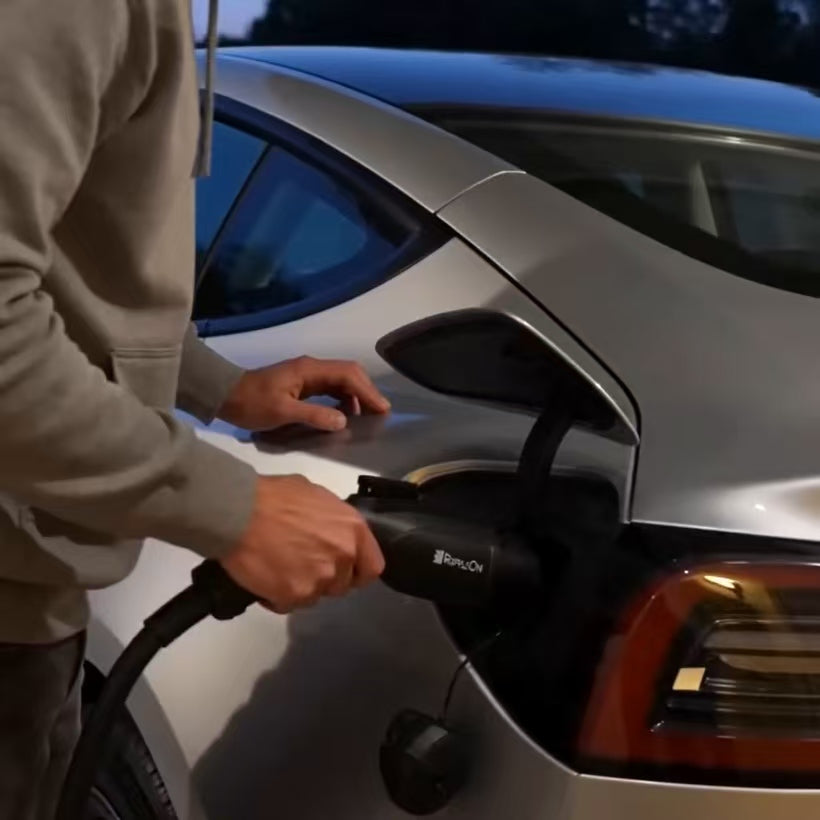
As EV charging standards continue to evolve, many homeowners are comparing NACS vs J1772 when choosing a home EV charger. While the two connectors use different designs, the biggest difference for most drivers comes down to compatibility rather than charging performance.
In this blog, we'll explain how NACS and J1772 compatibility actually works, what it affects, what it doesn't affect, and how to choose the right home EV charger for long-term flexibility.
Why NACS and J1772 Compatibility Matters More Than Ever
More EVs Are Transitioning to NACS
Tesla originally developed the NACS connector, but it is no longer just a Tesla standard.
Over the past two years, major automakers including Ford, General Motors, Honda, Nissan, Rivian, Mercedes-Benz, and others have announced plans to adopt NACS for future EV models.
As a result, more homeowners are considering whether they should install a NACS charger today or continue using their current J1772 charging setup.
Many Homes Still Use J1772 Chargers
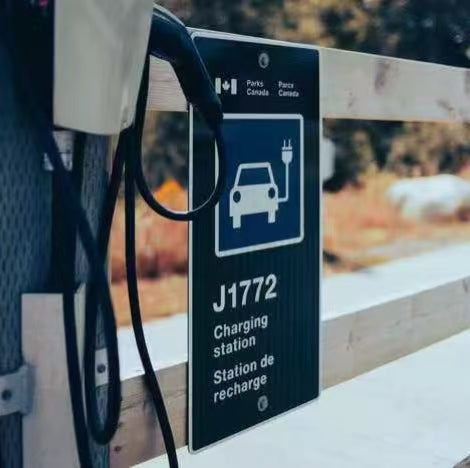
While NACS is becoming the future standard, J1772 remains the most common Level 2 charging connector currently used across North America. Popular models from Hyundai, Kia, Volkswagen, BMW, and many earlier EVs continue to use J1772 ports for AC charging.
Because home EV chargers often remain in service for 8–10 years or longer, many homeowners already have J1772 charging equipment installed and may not need to replace it anytime soon.
Mixed-Connector Households Are Becoming Common
It's increasingly common for households to own multiple EVs with different charging ports.
A common scenario might look like this:
- One driver owns a Tesla Model Y or another NACS-equipped vehicle
- Another driver owns a J1772-equipped EV
- Future vehicle purchases may use a different connector than current vehicles
This makes charger compatibility an important consideration when planning a home EV charging setup
.
How NACS and J1772 Compatibility Actually Works
Before discussing compatibility, it's important to understand the differences between the two connector standards themselves. If you're new to EV charging connectors, check out our complete guide to NACS vs J1772 differences for a deeper overview: NACS vs J1772: A Guide to Differences and Charger Compatibility.
Compatibility Depends on Both the Vehicle and the Charger
Home EV charging compatibility is determined by two components working together:
- The charging port on the vehicle
- The connector attached to the charger
For direct charging, the connector and vehicle port must use the same standard. A J1772 vehicle connects directly to a J1772 charger, while a NACS-equipped vehicle connects directly to a NACS charger. If the connector and charging port use different standards, an adapter is typically required.
Most Home Charging Setups Can Support Either Standard
One of the biggest advantages of Level 2 home charging is its flexibility.
Many homeowners assume they need to replace their charger when switching from a J1772 vehicle to a NACS vehicle or vice versa. In reality, modern charging equipment can usually continue serving different EVs through the use of compatible adapters.
Adapters Help Bridge Both Standards
Adapters have become the practical bridge between NACS and J1772.
With the appropriate adapter:
- A Tesla or other NACS vehicle can charge from a J1772 charger
- A J1772-equipped vehicle can charge from a NACS charger
For standard Level 2 home charging, high-quality adapters generally maintain the same charging performance and convenience as a direct connection. As a result, many homeowners can focus on charger features, reliability, and installation quality rather than worrying about connector compatibility alone.

What Compatibility Affects in Home EV Charging
Vehicle Compatibility Determines Connection Options
The most obvious impact of connector type is whether your vehicle can physically connect to the charger.
Before purchasing a home EV charger, always confirm the charging port used by your current EV. This simple step prevents unnecessary purchases and installation changes later.
Charger Compatibility Influences Long-Term Flexibility
Many EV owners replace their vehicle long before they replace their charger. For example, a homeowner who installs a Level 2 charger today may keep that charger through two or three vehicle ownership cycles.
Choosing equipment that supports adapter-based compatibility can make future upgrades significantly easier and less expensive.
What Compatibility Doesn't Affect in Home EV Charging
It Does Not Determine Level 2 Charging Speed
When it comes to Level 2 home EV charging, NACS and J1772 deliver essentially the same charging performance. Both standards support up to 80 amps on a 240V circuit, allowing for a maximum AC charging output of 19.2 kW.
In reality, most EVs cannot utilize the full 19.2 kW. Charging speed is typically limited by the vehicle's onboard charger, with many popular models charging at 7.2 kW, 9.6 kW, or 11.5 kW.
As a result, switching from a J1772 charger to a NACS charger will not automatically make home charging faster. The connector type primarily determines which vehicles can plug in directly, while charging speed is primarily determined by:
- Your vehicle's onboard charger
- Circuit capacity
- Charger amperage
It Does Not Determine Charging Reliability
A reliable charging experience depends far more on charger quality, electrical installation, and power delivery than connector type. A properly installed Level 2 EV charger should provide consistent overnight charging regardless of whether it uses NACS or J1772.
It Does Not Replace Installation Quality
Even the best charger cannot compensate for poor installation. Circuit sizing, breaker selection, wiring quality, and load management all have a greater impact on charging performance than connector choice.
How Adapters Make NACS and J1772 Compatible
Charging a Tesla With a J1772 Charger
Many Tesla owners charge at home using existing J1772 charging equipment.
A J1772-to-NACS adapter allows Tesla vehicles to connect to most Level 2 EV chargers without modifying the charger itself. This is often the most cost-effective option for homeowners who already have a J1772 charger installed.
Charging a J1772 Vehicle With a NACS Charger
The opposite setup works as well. A NACS charger paired with a NACS-to-J1772 adapter can provide Level 2 charging for many non-Tesla EVs.
This approach is becoming more common as homeowners install Tesla Wall Connectors or other NACS charging equipment while still owning J1772 vehicles.
How Homeowners Can Prepare for Both Standards
For many households, future-proofing is less about choosing the "right" connector and more about maintaining flexibility.
Practical strategies include:
- Choosing chargers that support adapter use
- Considering future vehicle purchases
- Planning for multi-EV households
- Prioritizing charger reliability and smart features

How to Choose the Right Home Charging Setup Today
Start With Your Current EV, But Think Ahead
If your current vehicle uses J1772, a J1772 charger remains a practical and straightforward choice. If you own a Tesla or another NACS-equipped EV, a direct NACS charging setup may provide the simplest daily experience.
However, most homeowners keep a charger much longer than they keep a vehicle. A quality Level 2 EV charger can easily remain in service for 8–10 years or more, while many drivers replace their EV within five to seven years.
So it often makes sense to think beyond your current vehicle and consider what you may be driving next.
Consider Long-Term Vehicle Compatibility
While many new EVs are transitioning to NACS, millions of J1772 vehicles remain on the road, and J1772 charging infrastructure will continue to exist for many years. The reality is that both standards will likely coexist throughout the remainder of this decade.
Rather than focusing on which connector will dominate, focus on flexibility—especially if:
- You may purchase another EV in the next few years
- Your household could own multiple EVs
- Different drivers use different charging standards
- You want to avoid replacing your charger after upgrading vehicles
Choose Chargers That Support Broad Compatibility
Rather than focusing only on NACS vs J1772, many homeowners benefit from choosing a smart Level 2 EV charger that can support multiple vehicle types through adapters while providing modern charging features.
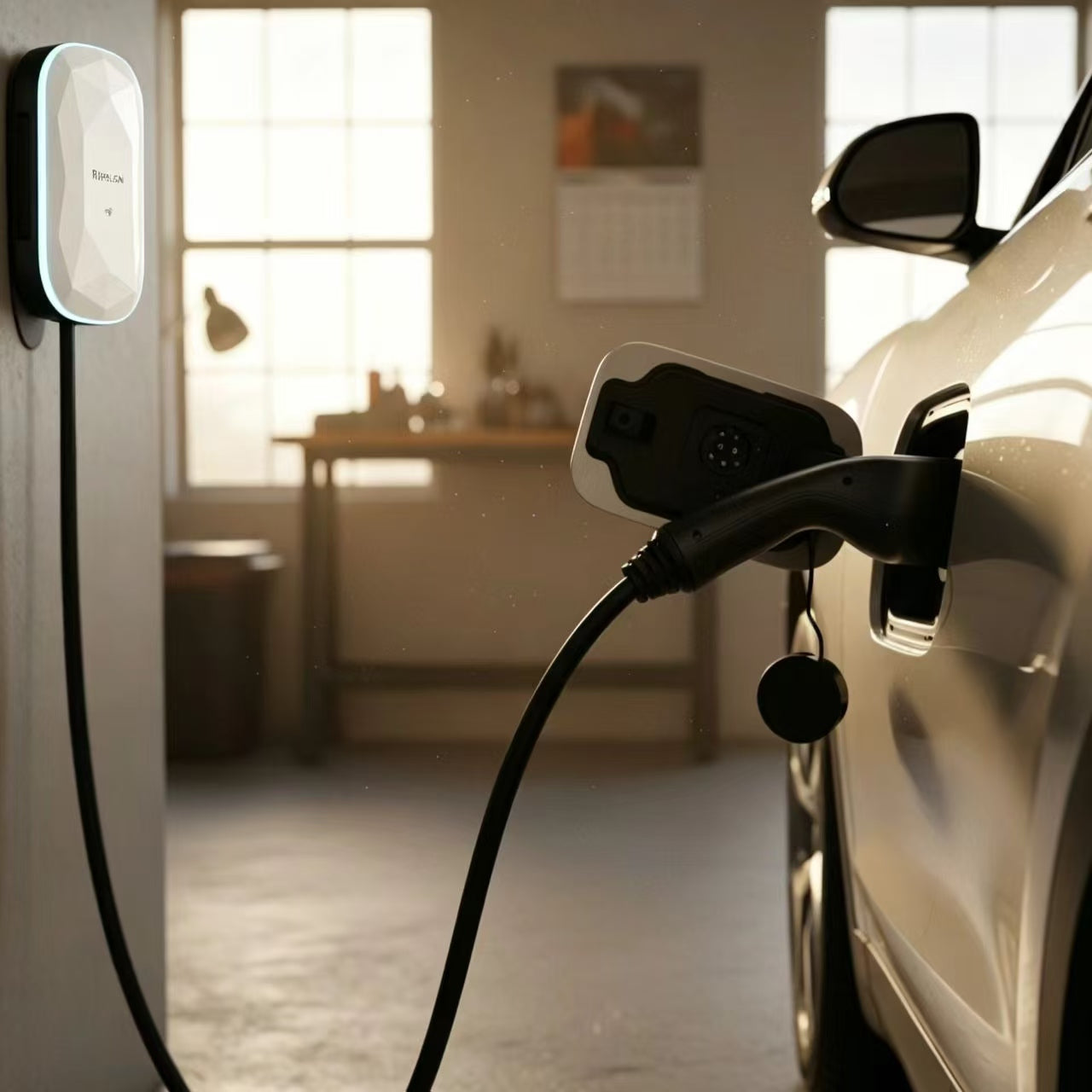
RippleOn Level 2 EV chargers are designed with this approach in mind. With both NACS and J1772 connectors, fast charging and smart features, RippleOn can simplify daily charging today while providing the flexibility to support future EV upgrades and multi-EV households.

Frequently Asked Questions
Do Adapters Reduce Charging Speed?
Generally, no. A properly rated adapter does not significantly affect Level 2 charging performance. Charging speed is determined by the vehicle, charger, and electrical circuit rather than the adapter itself.
Should I Replace My J1772 Charger With a NACS Charger?
Not necessarily. If your existing J1772 charger meets your needs, an adapter may provide an easier and more cost-effective path to future compatibility.
Can One Home Charger Support Both J1772 and NACS Vehicles?
Yes, with the right adapter. A J1772 charger paired with a J1772-to-NACS adapter can charge a Tesla or NACS-equipped vehicle at Level 2 speeds, while a NACS charger can serve a J1772 vehicle using a NACS-to-J1772 adapter.
Will J1772 Chargers Become Obsolete?
Not anytime soon. Although most automakers are transitioning to NACS for future models, millions of J1772-equipped vehicles will continue to be used for many years. Existing J1772 home chargers and public charging stations are expected to remain relevant throughout the transition period.

Leave a comment
This site is protected by hCaptcha and the hCaptcha Privacy Policy and Terms of Service apply.